3 Biggest Cybersecurity Threats to Consider For Your Business

A small businesses is as much at risk of a cybercriminal as a large corporation. A misconception that many smaller businesses tend to have is this idea of security through obscurity, that a business can be too small to be a target, but the reality is, that’s not true.
As attackers develop ways of automating much of their attacks, they are able to target hundreds of different targets, if not thousands, of small businesses at the same time. Small businesses typically will have less security measures in place with a lot less awareness within the company, and less resources to put into securing the company from these threats. This makes targeting them, the much easier option for many cybercriminals, when compared to larger organisations.
These smaller businesses are also just as lucrative as their larger counterpart. This is because the smallest of companies are capable of dealing with significant sums of money, or have very large customer sheets, which, under the GDPR, they are obligated to protect. These smaller businesses are also regularly working with much larger companies, and so a hacker might want to exploit one of them to get to their real target the much bigger organisation.
A smaller business also, on average has much more to lose, when they fall prey to a cyberattack. Reports have shown that the small company, one with less than 500 employees, losses around $2.5 million, every time they are attacked. Losing such large sums of money every time they are attacked, can have a devastating impact on a company, and that’s not mentioning the kind of damage it can do to the companies brand, when falling victim to such a breach.
It’s for these reasons, why the smaller business owner wants to be aware of the various cybersecurity threats – which should aid in stopping them. This article will go over the top 3 security threats that businesses today face.
1. Mobile Threats
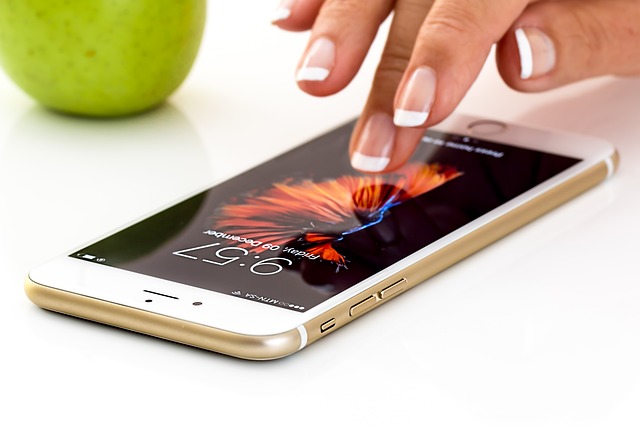
According to government reports, over the past year alone, mobile banking has experienced an increase of around 50%. Cybercriminals are definitely aware of this reality, and so constantly looking at ways of capitalizing on it.
There are currently, two different types of app-based threats that you should be aware of. The first, is the banking Trojan, which is usually disguised as a legitimate application, maybe a tool or computer game. These mobile banking Trojans are developed to reside dormant for extended periods of time, until the appropriate banking application has been executed. When this happens, the Trojan will then overlay the actual banking application with its fake login screen, and when the end user attempts to log in, the details will be stolen. The Trojan will typically transfer the end user over to the real banking application, after they have entered their password and username into it. This is done so that the victim is unsuspecting, of what just happened.
The second kind of banking threat you should be aware of, consists of applications that are designed to impersonate the real thing. You can find these fake applications in unofficial and sometimes, official app stores, with government reports stating that over 60,000 of them have been discovered in the past year alone. When the end user downloads one of these apps, they will resemble legitimate banking apps, with login screens. However, when the end user types their details in, they are immediately sent to the hacker.
2. Malware Attacks
The second biggest threat to a small business has to be a malware attack. Malware encompasses a large number of cyber threats, such as worms, viruses and Trojans. Malware essentially means malicious code of files, that hackers develop in order to access a system to steal or destroy its sensitive data. A computer may contract malware from a download site, spam emails or from connecting one system to a system or device that has already been infected.
These kinds of attacks can be very damaging for your small business, this is because they tend to cripple devices, which costs the company a lot of money to repair. They are also capable of giving a hacker backdoor access to a systems data, which can put both employees and customers at great risk. A small business is more likely to adopt a policy where employees are encouraged to bring their own devices, as this saves them both cost and time. However, this also increases the chances of them falling victim to a malware attack, as personal devices are much more at risk of downloading malicious code.
A business is capable of protecting itself from such attacks by having the right technological defence. Endpoint protection solutions is designed specifically to protect companies from malware downloads, while giving IT workers a central interface, of which they can use to manage the computers and small devices, as well as ensure the security of all users is up-to-date. Web security is also a crucial aspect of stopping end users from visiting websites where they might unknowingly download a malicious program.
3. Weak Passwords
Another major threat that your small business tends to face, is when its employees use weak passwords, which are easily guessed. Small businesses today are known for using multiple cloud services, which all require their own accounts for access. These services will typically contain sensitive financial and personal data. Using a password that can be easily guessed, or using the same password for all of the accounts, can be recipes for disaster.
A smaller business is generally at risk from employees using weak passwords, as a result of a lack of awareness about the potential risks of doing so. Research has shown that close to 20% of all passwords created by enterprise professionals can be guessed relatively easily, or are shared across multiple accounts.
In order to ensure that each and every employee uses a strong password, a company may want to consider using a Business Password Management tool. These platforms are designed to help employees create and manage the passwords for all of their accounts, giving them suggestions on complex passwords, which can’t easily be guessed. Businesses may also want to go down the rout of Multi-Factor Authentication. This authentication technology is designed to ensure that end users need to use more than one password in order to access a specific account. It usually comes in the form of additional verification steps, such as a passcode which is sent to a registered mobile device. With these authentication methods, hackers will be unable to access an account, even if they somehow manage to guess the correct password.
—AUTHOR INFO—
Uchenna Ani-Okoye is a former IT Manager who now runs his own computer support website https://www.compuchenna.co.uk.