
The Quiet Fasteners: What Precision Dowel Pins Teach About Lasting Connections
In both mechanical assemblies and human relationships, the strongest bonds are often the ones you don’t notice. A marriage doesn’t survive on grand gestures alone; it holds together through countless small acts of alignment, quiet support, and precise understanding. The same is true of the machines and devices that power our world. Behind every smoothly operating engine, every reliable surgical tool, every precision instrument, there are components designed not for drama, but for dependable connection.
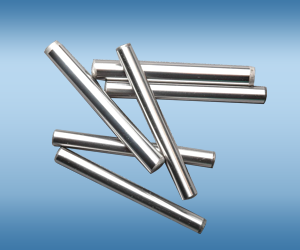
Among the most essential of these quiet connectors is a component so simple it’s easy to overlook: the steel dowel pin. Cylindrical, unassuming, often hidden from view, the dowel pin performs a critical function that mirrors the foundational work of a strong partnership. It doesn’t clamp or fasten with force. Instead, it aligns. It positions. It ensures that two parts fit together exactly as intended, time after time, under stress and through years of use. A misaligned assembly, like a misaligned relationship, wears unevenly, fails prematurely, and transmits vibration through the entire system.
The Precision That Makes Alignment Possible
The effectiveness of a dowel pin depends almost entirely on one thing: precision. A pin that varies by a few microns from its specified diameter won’t seat correctly. An assembly that relies on such a pin will never achieve the accuracy its designers intended. Parts will shift under load. Wear patterns will develop unpredictably. The system, whether a transmission or a timing mechanism, will compromise its performance from the start.
Achieving this level of precision requires more than standard machining. It demands the kind of precision pins and shafts manufacturing that can hold tolerances measured in tenths of thousandths of an inch, consistently, across thousands of parts. This is the domain of Swiss-type CNC machining, a process originally developed for watchmaking that has become indispensable for modern precision engineering. By supporting the workpiece immediately adjacent to the cutting tool, Swiss machines eliminate the deflection that plagues conventional lathes, producing components with exceptional straightness, roundness, and surface finish.
For a dowel pin, this matters immensely. The pin’s ability to align mating parts depends on its diameter being perfectly uniform along its entire length. Any taper, any out-of-roundness, any surface irregularity introduces uncertainty into the fit. Over time, that uncertainty becomes wear, and wear becomes failure. Precision manufacturing eliminates that uncertainty at the source.
Material Choices: Matching Strength to Purpose
Not all connections face the same demands. A dowel pin in a high-speed assembly line fixture experiences repeated insertion and removal, requiring exceptional surface hardness to resist galling. A pin in an aerospace actuator must withstand extreme temperature cycles without losing its dimensional stability. A pin in a medical instrument must resist corrosion and remain biocompatible, often for decades inside the human body.
These different requirements explain why dowel pins are manufactured from a wide range of materials and heat treatments. Alloy steel pins, hardened through carefully controlled thermal processing, provide the wear resistance needed for tooling and high-load applications. Stainless steel variants offer corrosion protection for medical, marine, and food processing environments. In some cases, engineers specify case-hardened pins that combine a tough interior with a wear-resistant surface—a kind of mechanical resilience that parallels the way strong relationships develop durable exteriors while maintaining flexibility at their core.
The production of these varied designs, from threaded and hollow variants to grooved pins that lock into place during installation, relies on the specialised manufacturing of steel dowel pins. Each variation introduces additional complexity: threads must be concentric with the pin body, hollow sections must maintain uniform wall thickness, grooves must be precisely positioned to achieve their intended retention. These are not features that can be added as afterthoughts; they must be engineered into the manufacturing process from the start.
Applications Where Alignment Is Everything
Walk through any modern industrial facility, and you’ll encounter dowel pins in roles where failure is not an option. In automotive powertrains, they locate transmission components with the precision required to handle hundreds of horsepower without vibration. In aerospace assemblies, they maintain the alignment of flight control mechanisms through thousands of hours of operation. In medical devices, they ensure that surgical instruments assemble correctly every time, in procedures where millimetres matter.
The common thread across these applications is repeatability. A dowel pin’s job isn’t to perform once; it’s to perform identically, every time, across the entire lifespan of the equipment. This reliability depends not only on the pin itself but on the system that produces it. Manufacturers who maintain rigorous quality control, who validate their processes through statistical monitoring, who trace each batch of material back to its source—these are the partners who deliver the consistency that critical applications demand.
The Quiet Strength of Proper Fit
There is a lesson in the dowel pin’s design that extends beyond engineering. The strongest connections are often those that work without friction, that align without forcing, that bear load without complaint. In a well-designed assembly, the pins are never noticed; they simply do their job, year after year, enabling everything else to function as intended.
The same could be said of the partnerships that sustain us—the friendships that ask nothing but give steady support, the collaborations that align diverse talents toward shared goals, the commitments that hold firm without constant reinforcement. These connections, like precision pins, succeed through exact fit and quiet reliability. They are not the most visible elements of our lives, but they are the ones that keep everything else from falling apart.